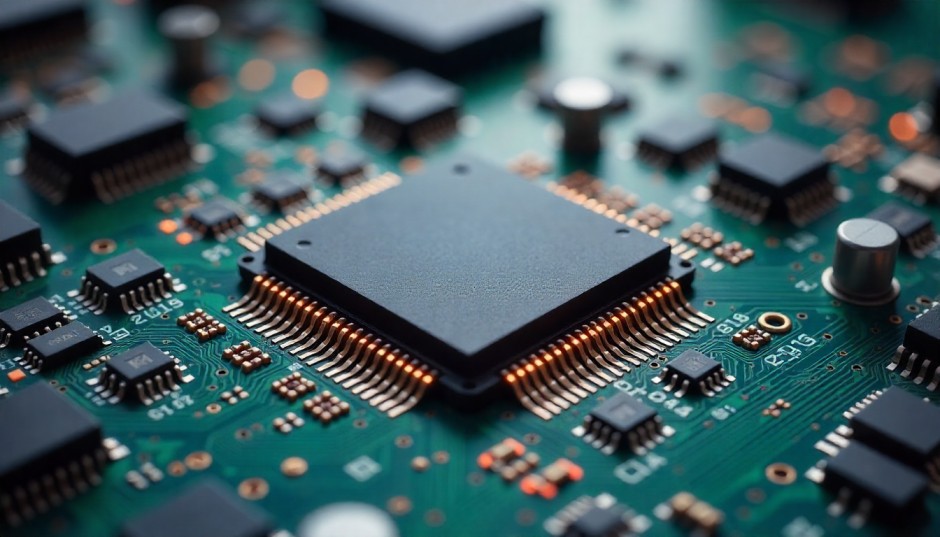
The Global Chiplets Market is rapidly evolving as semiconductor manufacturers adopt modular designs to enhance performance, reduce costs, and accelerate innovation. Chiplets are small, functional integrated circuit blocks that can be combined into a single package, enabling designers to create complex systems by integrating multiple smaller chips rather than a single large monolithic die.
This approach provides scalability, flexibility, and efficiency, addressing the growing demand for high-performance computing, AI, data centers, automotive electronics, and next-generation consumer devices.
Market Overview
The Global Chiplets Market is projected to reach USD 11.2 billion in 2024 and expand at a staggering compound annual growth rate (CAGR) of 48.1%, reaching USD 384.3 billion by 2033. The market growth is fueled by several key factors, including the limitations of traditional monolithic chips, increasing design complexity, and the rising demand for cost-effective, high-performance semiconductor solutions. Chiplets allow manufacturers to integrate heterogeneous components such as processors, memory, and specialized accelerators into a single package, optimizing performance, reducing time-to-market, and improving manufacturing yields.
Advancements in 2.5D and 3D packaging, high-density interconnects, and advanced thermal management techniques are driving adoption. Chiplets provide the added advantage of yield improvement, as defective dies can be replaced individually without scrapping entire wafers, significantly lowering production costs. Modular architectures also facilitate rapid integration of new technology blocks, enabling semiconductor companies to maintain competitiveness in a fast-paced market.
Market Dynamics
Drivers
The primary growth driver for the chiplets market is the increasing demand for high-performance, energy-efficient semiconductors across AI, high-performance computing, and cloud infrastructure applications. Chiplets provide the flexibility to mix and match functional blocks, enabling manufacturers to optimize performance, improve thermal management, and enhance scalability.
Cost-efficiency is another significant driver. By allowing individual die testing and selective replacement, chiplets reduce wafer wastage and manufacturing costs. The proliferation of edge computing, IoT devices, and automotive electronics further boosts market demand, as modular designs simplify integration and customization for diverse applications.
Restraints
Despite its advantages, the market faces challenges such as high R&D costs, complex integration, and standardization issues. Integrating chiplets from multiple vendors requires robust interconnect technologies, design frameworks, and testing protocols. The absence of universal standards can slow adoption, especially among smaller semiconductor manufacturers with limited resources.
Opportunities
There are significant opportunities in advanced packaging, 3D stacking, and heterogeneous integration. Companies investing in AI-assisted design, interconnect solutions, and high-density packaging are well-positioned to capture market share. Emerging applications in automotive electronics, AI accelerators, and industrial computing provide new avenues for chiplet adoption. Asia-Pacific presents a particularly attractive opportunity due to its semiconductor manufacturing ecosystem, strong R&D investment, and presence of leading foundries.
Challenges
Integration complexity, thermal and signal integrity management, and verification of multi-chip systems remain critical challenges. High development costs and the need for sophisticated EDA tools pose barriers for new entrants. Industry collaboration and standardization efforts are essential to streamline design and ensure compatibility across multiple vendors.
Regional Analysis
In 2024, Asia-Pacific is expected to establish a dominant position in the Global Chiplets Market, with a market share exceeding 39.8%. The region’s leadership is supported by advanced semiconductor manufacturing capabilities, extensive R&D investments, and a mature ecosystem of foundries and design houses. Countries such as China, Taiwan, Japan, and South Korea are investing heavily in chiplet design, packaging, and testing technologies to maintain global competitiveness.
North America represents another key market, driven by leading semiconductor companies, technological innovation, and substantial R&D investment. The U.S., in particular, leads in high-performance computing, AI, and data center applications, which are primary drivers of chiplet adoption. Europe shows steady growth, supported by automotive electronics, industrial automation, and semiconductor research initiatives. Emerging regions in Latin America and the Middle East & Africa are gradually adopting chiplets for specialized applications and industrial projects.
Download a Complimentary PDF Sample Report : https://dimensionmarketresearch.com/report/chiplets-market/request-sample/
Market Segmentation
The Chiplets Market is segmented by type, application, end-user, and technology. By type, it includes CPU chiplets, GPU chiplets, memory chiplets, and mixed-signal chiplets. CPU and GPU chiplets dominate due to demand in high-performance computing and AI applications. Memory chiplets are increasingly used to boost storage bandwidth and reduce latency, while mixed-signal chiplets integrate analog and digital components for efficient IoT and automotive solutions.
By application, chiplets serve high-performance computing, AI and machine learning, consumer electronics, automotive electronics, telecommunications, and industrial electronics. High-performance computing and AI lead adoption, driven by the need for scalable, energy-efficient processing. Automotive electronics leverage chiplets for ADAS systems, EV platforms, and infotainment, benefiting from modular and flexible designs.
End-users include semiconductor manufacturers, OEMs, system integrators, and technology solution providers. Semiconductor manufacturers remain the largest adopters, utilizing chiplets to reduce costs, improve yields, and accelerate innovation. OEMs and system integrators adopt chiplets to enhance product performance, reduce development cycles, and offer customized solutions to end-users.
Technology segmentation includes 2.5D integration, 3D stacking, interposer-based integration, and advanced packaging. 2.5D and 3D integration provide high-density interconnects, improved thermal performance, and optimized power efficiency. Interposer-based integration facilitates interoperability between chiplets from different vendors, while advanced packaging techniques maximize performance, compactness, and reliability.
Competitive Landscape
The Chiplets Market is highly competitive, with key players focusing on innovation, strategic collaborations, and advanced packaging technologies. Companies are investing in R&D for heterogeneous integration, high-density interconnects, and AI-enabled design tools. Partnerships between semiconductor firms, foundries, and design service providers are increasing to drive standardization and accelerate adoption. Leading market participants are expanding applications to include AI accelerators, edge computing, and automotive electronics to capture emerging opportunities.
Future Trends
The chiplets market is witnessing adoption of 3D stacking, heterogeneous integration, and AI-driven design automation. Modular architectures enable rapid integration of functional blocks, reduce design cycles, and optimize system performance. Cloud-based EDA tools, simulation platforms, and automated testing solutions are gaining importance for efficient chiplet development. Edge computing, AI accelerators, and next-generation data centers will continue to drive demand, while collaborative industry initiatives and standardization efforts facilitate broader market adoption.
FAQs
Q1: What are chiplets, and why are they used?
Chiplets are small, modular integrated circuit blocks that can be combined into a single package to create complex systems. They allow manufacturers to integrate heterogeneous functions, improve yields, and optimize costs.
Q2: Which region dominates the chiplets market?
Asia-Pacific dominates with over 39.8% share in 2024 due to strong semiconductor manufacturing, R&D investments, and advanced production capabilities.
Q3: What are the key applications of chiplets?
Applications include high-performance computing, AI, consumer electronics, automotive electronics, telecommunications, and industrial electronics.
Q4: What challenges do chiplets face?
Challenges include integration complexity, thermal and signal integrity management, high R&D costs, and lack of universal design standards.
Q5: How do chiplets compare to traditional monolithic chips?
Chiplets offer modularity, faster time-to-market, cost reduction, scalability, and the ability to integrate diverse functions, unlike monolithic chips which are larger and less flexible.
Summary of Key Insights
The Global Chiplets Market is set for tremendous growth, projected to reach USD 384.3 billion by 2033 at a CAGR of 48.1%. Asia-Pacific leads due to advanced semiconductor infrastructure and R&D investments, while North America benefits from technological innovation and high AI and HPC demand. Europe maintains steady growth driven by automotive and industrial applications. Key trends include 3D stacking, heterogeneous integration, AI-assisted design, and advanced packaging. Chiplets provide flexibility, cost efficiency, scalability, and performance optimization, making them critical for semiconductor innovation. Emerging applications in AI, edge computing, automotive electronics, and consumer devices will continue to drive adoption globally.
Purchase the report for comprehensive details : https://dimensionmarketresearch.com/checkout/chiplets-market/