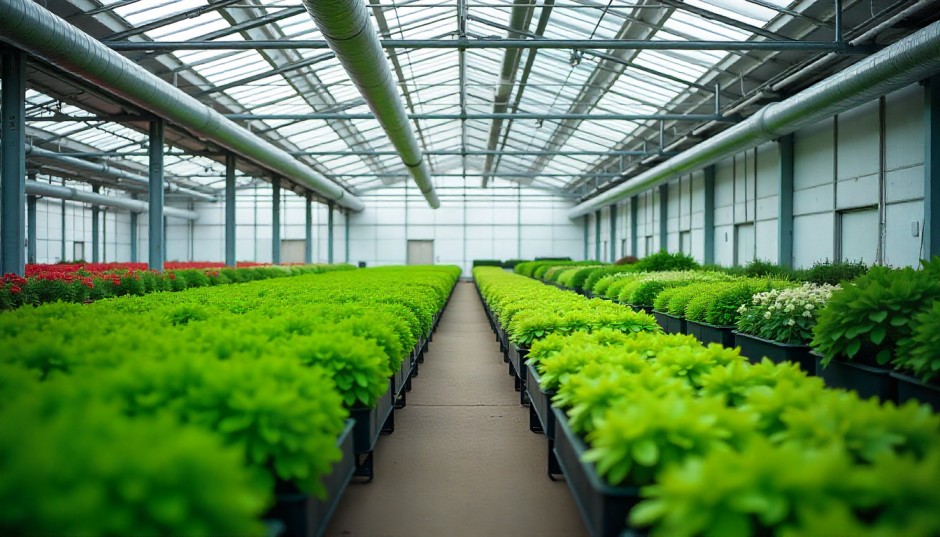
The Global Commercial Greenhouse Market is witnessing rapid expansion as controlled-environment agriculture becomes one of the most effective solutions to meet rising global food demand while minimizing land constraints, climate fluctuations, and supply chain vulnerabilities.
With increasing adoption of advanced greenhouse systems designed to support year-round crop production, the market continues to evolve into a core pillar of modern agriculture. Higher yields, improved crop quality, and optimized resource management are driving commercial growers toward greenhouse investments to meet consumer expectations for chemical-free, premium-grade fruits, vegetables, and ornamentals.
Market Overview
The Global Commercial Greenhouse Market is poised for substantial growth, reaching a market value of USD 40.6 billion in 2024 and projected to surge to USD 93.9 billion by 2033, reflecting a robust CAGR of 9.8%. Rising awareness of sustainable farming practices, combined with unpredictable climatic conditions and shrinking arable land, has significantly accelerated the transition from traditional farming to greenhouse-based cultivation. Commercial greenhouses offer growers unmatched flexibility in terms of crop cycles, allowing multiple harvests annually with far greater productivity when compared to open-field farming.
Technology plays a pivotal role in shaping market growth as automation, smart irrigation, IoT-powered crop monitoring, and artificial lighting systems enhance both efficiency and profitability. Growers are increasingly shifting toward greenhouses not only for food production but also for floriculture, cannabis cultivation, seedling development, and horticultural research. In addition, the growing consumer preference for organic and pesticide-free produce is strengthening greenhouse adoption worldwide.
Market Dynamics
The primary driver of the Commercial Greenhouse Market is the rising demand for locally grown food products. Supply chain disruptions, population growth, and the rise of urban living have created immense pressure on agricultural systems. Greenhouses offer an opportunity to cultivate crops closer to consumption hubs, reducing food miles and enabling rapid distribution through retail and e-commerce grocery networks. Additionally, government initiatives supporting sustainable farming, water conservation, and renewable agriculture are fueling investment across both developed and emerging markets.
Despite its strong growth trajectory, the market faces challenges linked to high initial installation costs and the need for specialized technical knowledge to operate fully automated or climate-responsive greenhouse setups. Small and medium-scale growers may face difficulties in adopting these technologies without financial assistance or training support. Nevertheless, the integration of modular greenhouse designs, scalable tech-enabled systems, and turnkey greenhouse solutions is expected to remove barriers and widen market accessibility.
Future opportunities remain highly promising as renewable energy–powered greenhouses, artificial intelligence–driven farm automation, and data-driven crop modeling open a new era of high-precision agriculture. Vertical greenhouses integrated into residential and commercial complexes are also gaining attention, especially in regions with high urban population density.
Market Segmentation
The Commercial Greenhouse Market is segmented across various categories such as structure type, material, crop type, and technology. Venlo-style greenhouses continue to dominate due to their enhanced structural strength and capability to support large-scale automated farming systems. Polyethylene and polycarbonate coverings remain widely adopted owing to their affordability, insulating properties, and flexibility, while glass-based greenhouses retain relevance across premium agricultural projects requiring advanced climate management.
In terms of crop type, vegetables command the largest share as greenhouse cultivation significantly enhances freshness, uniformity, and nutritional consistency. Fruits, ornamentals, and nursery crops also continue to gain traction, with floriculture showing particular growth driven by the wedding industry, interior décor trends, and e-commerce flower retailing. Furthermore, the rise of cannabis cultivation in legalized markets has triggered specialized greenhouse developments offering high-precision humidity, temperature, and CO₂ control capabilities tailored to crop sensitivity.
Regional Analysis
North America is projected to dominate the Global Commercial Greenhouse Market with a market share of 33.8% by the end of 2024. The region benefits from advanced agricultural infrastructure, technology-rich cultivation practices, and supportive regulatory frameworks enabling high-value horticulture and protected farming. Commercial growers in the United States and Canada are rapidly transitioning toward energy-efficient greenhouse systems using AI-based automation, renewable power sources, smart irrigation networks, and LED grow-light solutions to boost production and profitability.
Additionally, North America exhibits strong investments in greenhouse-grown organic produce and premium vegetables, along with surging interest in commercial floriculture and legalized cannabis cultivation. Large industry participants continue to expand their presence in the region by developing state-of-the-art greenhouse facilities and offering turnkey solutions for growers. Meanwhile, Europe holds a significant footprint supported by leading agricultural innovations, greenhouse clusters in the Netherlands, and strong cross-border produce distribution. The Asia-Pacific region is anticipated to be the fastest-growing over the next decade due to rising food demand, supportive government agricultural modernization initiatives, and increasing adoption of technologically sophisticated greenhouse farming among growers in China, Japan, South Korea, and India.
Download a Complimentary PDF Sample Report : https://dimensionmarketresearch.com/report/commercial-greenhouse-market/request-sample/
Competitive Landscape
The Commercial Greenhouse Market features strong competition among global equipment providers, technology innovators, greenhouse constructors, and agricultural automation companies. Industry players emphasize product efficiency, durability, and cost-effectiveness to serve both large-scale and mid-scale growers. Companies increasingly invest in integrated greenhouse management solutions, complete with lighting, nutrient delivery, irrigation, climate control, and remote monitoring systems. Strategic partnerships, R&D investments, global expansion initiatives, and automated smart greenhouse developments remain key competitive strategies to attract cultivators across diverse crop markets.
Future Outlook
The future of the Commercial Greenhouse Market is deeply aligned with next-generation farming technologies. The adoption of AI-enabled sensors, precision fertigation, digital twin crop modeling, and renewable-powered greenhouse infrastructure will continue to reshape cultivation standards. As food security, climate resilience, and urban farming gain political and public priority, commercial greenhouse systems are expected to become essential assets for sustainable agriculture in both developed and developing economies.
FAQs
What is a commercial greenhouse?
A commercial greenhouse is a controlled farming structure designed to support large-scale year-round cultivation of crops by regulating temperature, humidity, lighting, and irrigation using climate-management technologies.
Why are commercial greenhouses becoming more popular?
Their popularity is driven by the demand for chemical-free produce, reduced crop vulnerability to weather changes, and the ability to achieve consistent high yields irrespective of season or location.
Which crops are most commonly cultivated in commercial greenhouses?
Vegetables hold the largest share, followed by fruits, ornamental plants, and specialty crops such as cannabis in regions where cultivation is legalized.
What is the biggest challenge for commercial greenhouse operators?
High initial installation and technology integration costs remain a major challenge, particularly for small and medium-scale growers.
How is technology shaping the commercial greenhouse sector?
Automation, IoT sensors, LED lighting, AI-driven monitoring, and smart irrigation are enabling highly efficient farming systems that reduce labor needs, save water, and increase productivity.
Summary of Key Insights
The Global Commercial Greenhouse Market is set to grow rapidly as global food demand intensifies and weather-resilient farming becomes a necessity for food security. North America remains the leading regional market, supported by advanced infrastructure and strong investment in precision horticulture. The market will continue to benefit from rising adoption of smart automation systems, sustainable production methods, and digitally-optimized greenhouse ecosystems. As growers pursue higher yield, profitability, and sustainability, the transition toward commercial greenhouse cultivation will remain a defining trend in future agriculture.
Purchase the report for comprehensive details : https://dimensionmarketresearch.com/checkout/commercial-greenhouse-market/