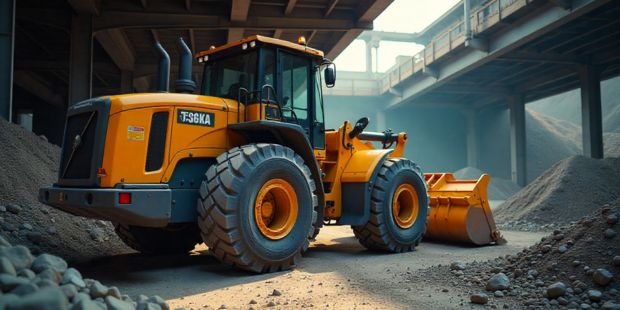
The Global Construction Equipment Market continues to experience robust expansion driven by rising infrastructure development, rapid urbanization, and growing investments in both residential and commercial construction projects worldwide. As economies evolve and prioritize modernization, the demand for highly efficient machinery—ranging from excavators and loaders to cranes and road-building equipment—has increased significantly. This market represents one of the core pillars of global economic growth, contributing directly to improved productivity, reduced construction timelines, and enhanced project efficiency.
Over the years, technological advancements have reshaped how construction equipment operates. From automation and telematics to electric-powered machinery, innovation is transforming operational capabilities and helping companies meet evolving regulatory and sustainability standards. These modern machines offer improved fuel efficiency, greater safety, and reduced maintenance costs—making them essential across construction, mining, agriculture, and industrial applications.
In 2023, the Global Construction Equipment Market reached a valuation of USD 208.7 billion and is projected to grow to USD 362.8 billion by 2032, expanding at a promising CAGR of 6.3%. This growth is supported by increasing government investments, a rise in mega infrastructure programs, and a shift toward smart construction technologies that streamline project workflows and elevate long-term productivity.
Market Dynamics
Growing Infrastructure Development Worldwide
The rapid expansion of global infrastructure—spanning roads, bridges, airports, ports, and smart cities—is one of the primary growth drivers of the construction equipment industry. Governments in both developed and emerging economies are boosting public infrastructure spending to stimulate economic growth, improve mobility, and enhance trade networks. Countries like India, China, Indonesia, the UAE, and the United States are at the forefront of major structural developments, significantly fueling equipment demand.
Large-scale infrastructure projects require high-performance machinery that can operate efficiently under heavy workloads. Earthmoving tools such as bulldozers, excavators, and crawler loaders remain in high demand due to their versatility and productivity on job sites. Additionally, road construction machinery, including graders, asphalt pavers, and compactors, are essential for expanding highway networks and urban transport infrastructure.
Advancements in Automation & Smart Technology
Technological evolution is reshaping how construction machinery is manufactured and utilized. The rise of automation, IoT-based telematics, and machine control systems has improved the precision, efficiency, and safety of equipment. Advanced technologies enable better route planning, optimized fuel use, remote monitoring, and predictive maintenance, reducing downtime and maximizing profitability.
Electric and hybrid construction machinery is also gaining traction due to strict emission norms and sustainability goals. Manufacturers are investing heavily in green technologies to deliver quieter, energy-efficient, and eco-friendly vehicles for urban construction environments.
Rising Demand from Mining & Industrial Sectors
Beyond construction, industries such as mining, oil & gas, and forestry also contribute significantly to the rising demand for heavy equipment. Excavators, dump trucks, and dozers are essential for mineral extraction and industrial site preparation. Global industrialization, especially in emerging economies, further reinforces the demand for durable and high-capacity machinery.
Construction Equipment Market Segmentation
By Equipment Type
Construction equipment is broadly categorized into:
• Earthmoving Equipment
Includes excavators, loaders, bulldozers, and backhoe loaders. These machines dominate the market due to their widespread usage across construction, mining, and infrastructure projects.
• Material Handling Equipment
Cranes, forklifts, and conveyors fall under this segment, essential for heavy lifting, material transportation, and warehouse operations.
• Road Construction Equipment
Graders, pavers, compactors, and asphalt finishers are crucial for building roads, highways, and related infrastructure.
• Concrete & Building Construction Equipment
Concrete mixers, batching plants, and building hoists support real estate, commercial, and industrial construction activities.
By Propulsion
• Diesel-powered Equipment
Continues to dominate owing to high power performance and fuel efficiency.
• Electric and Hybrid Equipment
Increasingly preferred for urban and indoor projects due to zero emissions and lower noise levels.
By Application
• Residential Construction
Driven by urban housing demand and government-backed affordable housing programs.
• Commercial Construction
Hotels, offices, shopping complexes, and industrial parks contribute substantially to this segment.
• Infrastructure
Transportation, utility, and public infrastructure dominate overall market share due to continuous global development initiatives.
Download a Complimentary PDF Sample Report:
https://dimensionmarketresearch.com/report/construction-equipment-market/request-sample/
Construction Equipment Market Regional Analysis
Asia-Pacific emerged as the largest regional market in 2023, capturing a substantial 37.3% share of the global industry. The region’s growth is largely attributed to strong governmental support for infrastructure development, rising urban migration, and massive project pipelines in India, China, and Southeast Asia. These economies are heavily investing in highways, smart cities, rail networks, renewable energy facilities, and industrial corridors, all of which accelerate machinery adoption.
China continues to dominate the regional landscape due to extensive real estate development and continuous industrial expansion. Meanwhile, India benefits from initiatives such as Smart Cities Mission, Bharatmala, and PM Gati Shakti, which demand large-scale equipment deployment. Southeast Asian nations, including Indonesia and Vietnam, are also emerging as major construction hubs as they prioritize urban modernization.
North America and Europe remain mature markets with strong demand for technologically advanced, automated, and eco-friendly construction machinery. Stringent emission regulations are pushing manufacturers to innovate and launch greener equipment solutions. The Middle East & Africa region also exhibits growing potential due to large-scale projects such as NEOM, airport expansions, and energy infrastructure developments.
Key Market Trends
Shift Toward Electrified Construction Machinery
Electric equipment is increasingly being adopted as companies aim to reduce carbon emissions and meet sustainability goals.
Rising Use of Telematics & Fleet Management Solutions
Remote monitoring, GPS tracking, and predictive maintenance enhance operational efficiency and reduce total cost of ownership.
Growing Rental Equipment Market
High equipment costs and project-specific demands are driving contractors toward flexible rental models to reduce financial burdens.
Adoption of Autonomous Machinery
Self-driving excavators, robotic bulldozers, and AI-powered site monitoring systems are gradually transforming construction sites.
Competitive Landscape
The construction equipment industry is highly competitive, featuring global manufacturers that continuously invest in innovation, product development, and technological upgrades. Companies are focusing on expanding their product portfolios, improving energy efficiency, and developing smart control systems to enhance machine performance.
Strategic partnerships, mergers & acquisitions, and regional expansions remain key strategies used by leading firms to strengthen their market presence. Manufacturers are also prioritizing customer-centric solutions, including after-sales services, equipment financing options, and advanced training programs to optimize machinery usage and customer satisfaction.
Future Outlook
The Global Construction Equipment Market is set to experience strong and sustained growth throughout the next decade. Rising infrastructure investments, technological innovation, and growing environmental considerations will shape future market dynamics. The shift toward electric, autonomous, and smart-connected equipment will create new opportunities for manufacturers and suppliers across the value chain.
The continuous push for modernization in urban centers, coupled with substantial industrial and commercial development, ensures that demand for advanced construction machinery remains consistently high.
FAQs
1. What is driving the growth of the Global Construction Equipment Market?
Growth is primarily driven by increasing infrastructure development, rapid urbanization, technological advancements, and rising demand from mining and industrial sectors.
2. Which region dominates the construction equipment market?
Asia-Pacific leads the market with a 37.3% share due to major infrastructure investments and development initiatives in India, China, and Southeast Asia.
3. What types of equipment are most commonly used in the construction sector?
Earthmoving equipment—such as excavators, loaders, and bulldozers—are the most widely used due to their versatility across multiple construction applications.
4. How is technology influencing the construction equipment industry?
Automation, telematics, electric machinery, and IoT-based solutions are improving safety, efficiency, fuel management, and operational productivity across job sites.
5. Is electric construction equipment gaining popularity?
Yes, electric and hybrid equipment are becoming increasingly popular due to stricter emission regulations and the global shift toward environmentally sustainable solutions.
Summary of Key Insights
The Global Construction Equipment Market is on a robust growth trajectory, projected to reach USD 362.8 billion by 2032 with a strong CAGR of 6.3%. This expansion is propelled by large-scale infrastructure development, rising adoption of advanced technologies, and increasing demand for efficient machinery across industries. Asia-Pacific remains the dominant region, while automation, electrification, and telematics are shaping the future of the sector. As global construction activities continue to rise, the market presents significant opportunities for innovation, investment, and long-term expansion.
Purchase the report for comprehensive details:
https://dimensionmarketresearch.com/checkout/construction-equipment-market/